 Return
diary
Return
diary
Musicales de l'Ouille Allègre - Concert by Ensemble La Piémontoise
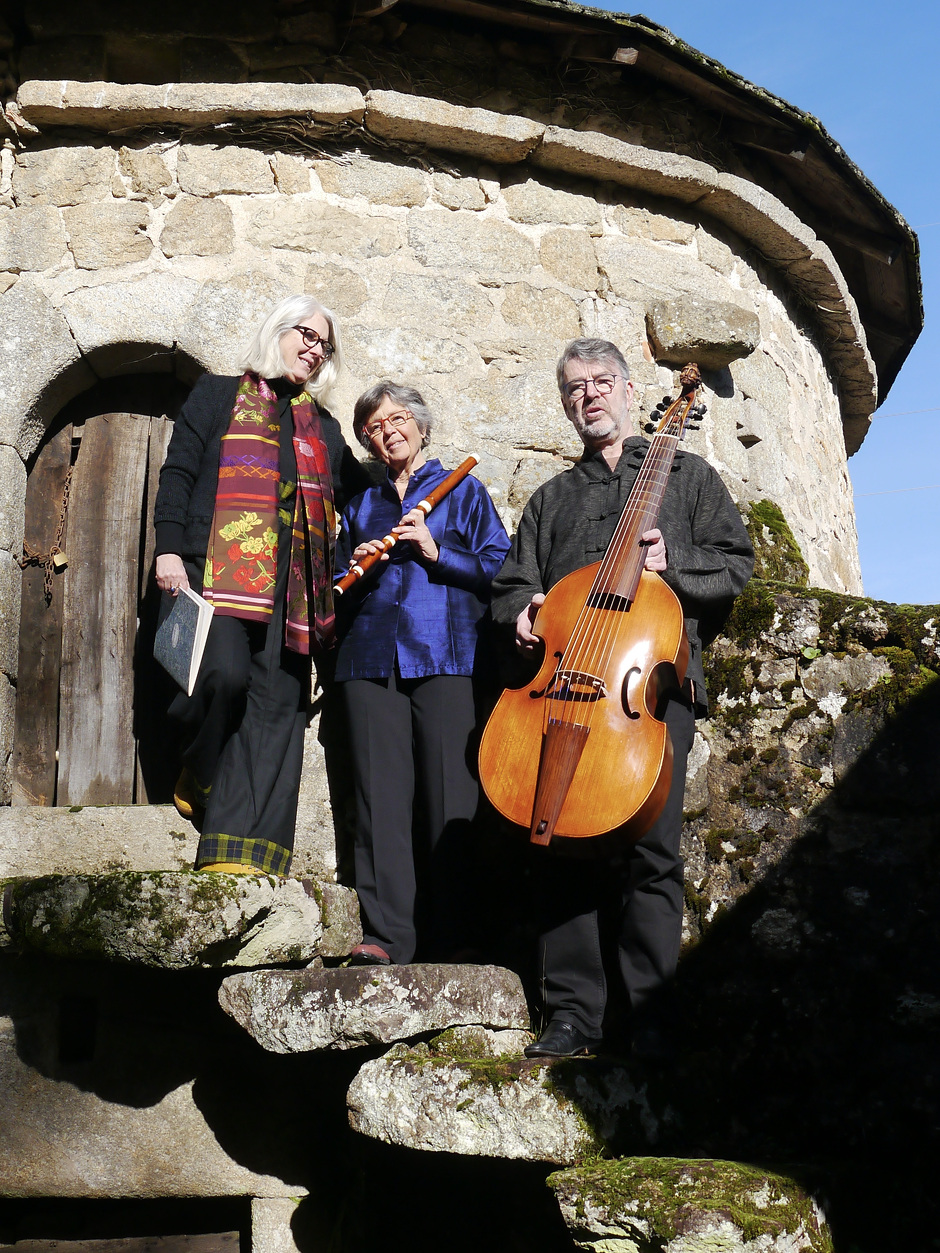
The Ensemble La Piémontoise invites you to immerse yourself in Telemann’s trio music and, at the same time, to discover some Italian composers of his era who may have influenced him or, on the contrary, reinforced his own compositional style.
Description
In the European musical world of the 18th century, Italian music was particularly in vogue, with its operas and melodious tunes, its unbridled virtuosity, and its four-movement sonatas derived from the “sonata da chiesa” (often: adagio, allegro, adagio, allegro).
In Germany, G.P.H. Telemann and his two famous colleagues and friends, J.S. Bach and G.F. Handel, explored all the styles in vogue in their day, each in accordance with his own personality: the numerous Italian operas by Handel and Telemann would make the latter two famous during their lifetimes.
All wrote French-style suites, sonatas, and concertos in the Italian manner; Bach’s transcriptions based on Vivaldi helped to revive Vivaldi after a century of obscurity.
For this concert, we have chosen two of Telemann’s ‘Sonate a tre’, trios in which each instrument has an independent part and the writing is often polyphonic and virtuosic.
The trio that opens the concert is in four movements: Dolce, Allegro, Largo, Allegro.
The Italian influence is most evident in the two allegros, which demand great virtuosity from the flute and the viola da gamba.
The style of the first allegro is very close to that of Vivaldi, whilst the last sounds a little like an Irish jig.
The Italian composers featured in this program, hailing from different cities, crossed paths in one way or another: a common thread links all three of them.
Francesco Mancini was a composer and organist at the Royal Chapel in Naples, alongside Alessandro Scarlatti (Domenico’s father), whom he eventually succeeded as First Maestro. He composed numerous operas, and the style of his instrumental works is highly vocal.
The sonata we have chosen for this concert (Amoroso, Allegro, Largo, Allegro) is a fine example of this, with its ‘cantabile’ style, rich in Neapolitan color, and its virtuosity.
Giovanni Platti, like D. Scarlatti, was a pupil in Venice of F. Gasparini, who himself had been a pupil of A. Corelli in Rome. In Venice he certainly rubbed shoulders with Vivaldi at the Ospedale della Pietà, and then he emigrated to Germany, where he helped to spread the Italian music of his time.
The program features a sonata for flute and basso continuo: Pastorale, Non tanto Adagio, Allegro assai
The life of Francesco Geminiani is a testament to the cosmopolitan atmosphere of his era. A pupil of A. Corelli and A. Scarlatti, he moved to England, where he spent most of his life and associated with G.F. Handel, who was also based in London.
After spending time on several occasions in Paris and Holland, he ended his life in Dublin. A violinist, he transcribed violin sonatas for concerto grosso, composed numerous collections of pieces for his instrument, and wrote method books on playing technique, which are extremely useful for understanding the style of his era.
The program features a rondeau-style sarabande titled: Tendrement.
The concert will conclude with another of Telemann’s ‘Sonata a tre’, clearly influenced by Italian music. Modeled on the Sonata da chiesa: Largo, very vocal and cantabile; Vivace, in fugato style where the three instruments chase one another, passing the same motifs between them; Dolce, a very beautiful melody that passes from one instrument to another; Vivace, another fugato full of syncopation and unbridled virtuosity.
Prices
Full price: €18, Reduced price: €14 (students, under-18s, unemployed, members).
Free admission for children under 12.
Payment methods
-
 Bank/credit card
-
 Check
Check
-
 Cash
Cash
-
 Online payment
Opening period
Thursday, August 6, 2026: Performances between 8:30 p.m. and 10:00 p.m.
Languages spoken
-
 French
Location

Animals
Animals accepted: No


- Concert


-
diary Bonneval-sur-Arc
Musicales de l'Ouille Allègre - List...
- Conference
Thursday, August 6
-
diary Bessans
Musicales de l'Ouille Allègre - Disco...
- Conference
Tuesday, August 4
-
diary Bessans
Musicales de l'Ouille Allègre - List...
- Conference
Tuesday, August 4
-
diary Bessans
Musicales de l'Ouille Allègre - Openi...
- Concert
Tuesday, July 28
-
diary Bessans
Musicales de l'Ouille Allègre - Con...
- Concert
Sunday, August 2
-
diary Bonneval-sur-Arc
Musicales de l'Ouille Allègre - Con...
- Concert
Thursday, July 30
-
diary Bessans
Musicales de l'Ouille Allègre - Con...
- Concert
Tuesday, August 4
-
diary Bessans
Musicales de l'Ouille Allègre - List...
- Conference
Tuesday, July 28
-
diary Bessans
Musicales de l'Ouille Allègre – Con...
- Concert
Friday, August 7