

The hamlet of l'Ecot
Authenticity and simplicity
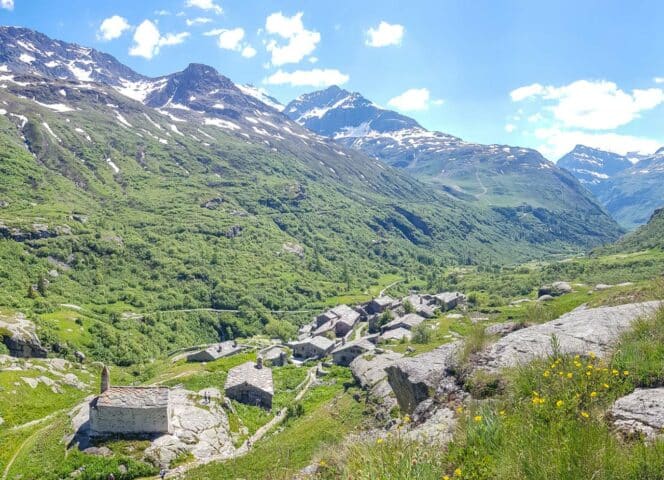
It is a very lovely walk. The chalets of l’Ecot, made of stones and lauzes, overlook the bottom of the valley.
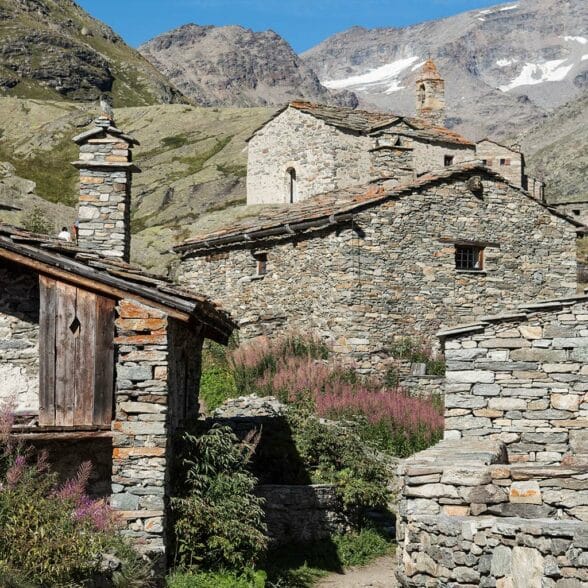
You will be amazed by the simple and austere architecture of this hamlet at the end of the world, which reflects the harshness of human life at high altitude!
Cultural and architectural heritage…
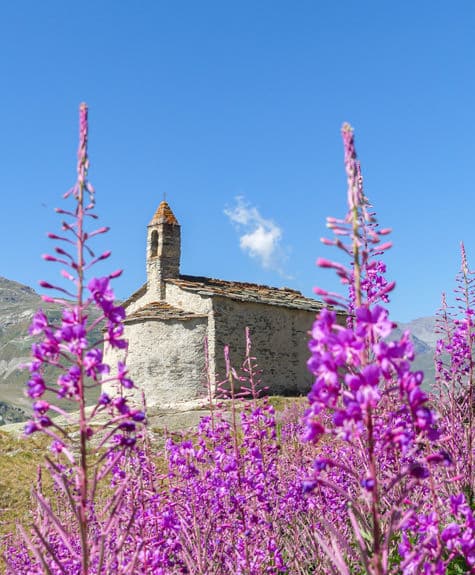
This hamlet, steeped in history since the Middle Ages, completely restored and protected since 1971, was chosen to be the village of Sébastien and his endearing grandfather César. It is as if time has stopped in this hamlet where you can admire these traditional stone houses grouped together under the benevolent eye of the Sainte-Marguerite Chapel.
A unique character that has not escaped the film crews, who have managed to enhance its beauty in each of the adventures of Belle and Sébastien.
In summer, a 4 km family route from Bonneval sur Arc allows hikers to reach this hamlet to discover its treasures and walk in the footsteps of Sébastien.
It is also the starting point for walks to the Carro and Evettes refuges, to the sources of the Arc, a natural and wild glacial cirque, and for a beautiful canyoning descent of the Arc.
With its old stones and slate roofs, it is a completely preserved cultural and architectural heritage
Who has won over the cinema!
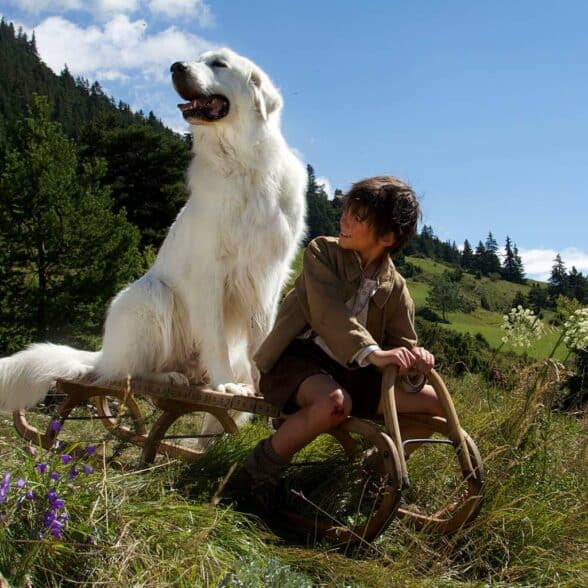
L’Écot represents a completely preserved cultural and architectural heritage that seduced Nicolas Vanier during his search for a filming location for his film Belle et Sébastien. Many remember this television series from the 60s retracing the extraordinary encounter between a mountain child and a wild dog.
The hamlet of l’Ecot was a perfect fit for the script, filming took place in 2012, the film was released in 2013 and « made » 3 million admissions. In 2014, Christian Duguy directed the sequel to this story entitled Belle et Sébastien, l’aventure continue.
L’Ecot is obviously the main setting; the film was released in December 2015. Belle et Sébastien 3 was released in cinemas in February 2018. This episode was also filmed in Bonneval and in the hamlet of l’Écot.
Zoom on the Sainte Marguerite Chapel
Shepherds from Piedmont are said to have settled here with their flocks around the 5th century, surviving the harsh and austere conditions of the high mountains.
Inhabited year-round until 1960 and then abandoned during the winter, L’Écot is once again home to several young families from Bonneval sur Arc on a permanent basis.
A bit of history…
Romanesque art is an artistic style primarily associated with architecture that originated in Western Europe in the late 10th century and came to an end with the emergence of Gothic art (early 12th century). Its technical characteristics include a basilica-style floor plan, barrel vaults with transverse ribs, cross vaults, domes, bays, and buttresses. The decoration is influenced by Antiquity, Eastern art, and Celtic traditions. Two periods can be distinguished: Early Romanesque (950–1070) and High Romanesque (1060–1130), the latter being the evolution and culmination of the former.